Erlin AI Review (2026): Features, Pricing, Pros & Cons
An honest Erlin AI review — what it does, real 2026 USD pricing, the 4 engines it tracks, its built-in content generation, pros, cons, and who should skip it. Verified July 2026.

On this page
Erlin AI is one of the more ambitious names in AI-search visibility, because it tries to do two jobs at once: track how ChatGPT, Perplexity, Gemini, and Claude cite your brand — and write the GEO/SEO content meant to fix your gaps, in the same tool. Most trackers stop at measurement. Erlin bundles a content engine that drafts up to 200,000 words a month. That's a genuinely different pitch. It's also a young, thinly documented product with no free tier, a paid trial, and a pricing page that doesn't fully reconcile. This review is the honest version: what Erlin actually does, what it costs in 2026, where it's strong, where it isn't, and who should look elsewhere.
Disclosure: I build FixAEO, a free-to-start AEO tool that competes with Erlin AI. So read this knowing that — I'll point out plainly where Erlin beats us, and it does, in a few real places (content generation being the biggest). Every price and fact below was checked against Erlin's own pages on 2026-07-19, not lifted from an older review. Where Erlin's site doesn't state something — company details, per-tier engine allocation — I say so rather than guess.
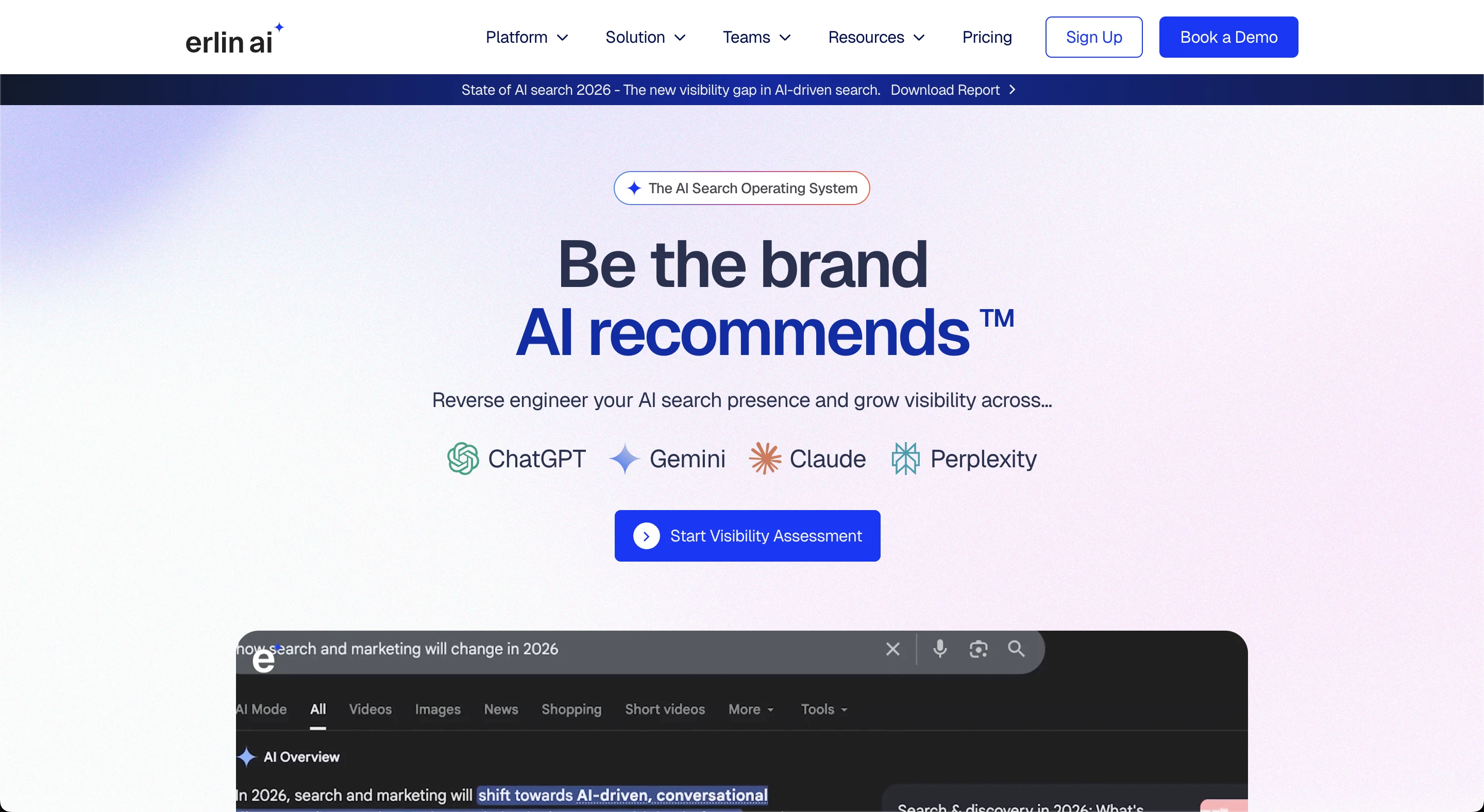
Erlin AI's homepage, July 2026 — billed as "the AI Search Operating System," tracking ChatGPT, Gemini, Claude, and Perplexity.
Erlin's homepage sells a single promise — "Be the brand AI recommends." Underneath that is a tracker plus a content factory: watch your visibility across the major assistants, see where competitors are winning the answer, then generate optimized articles to close the gap without leaving the app. It's a tidy loop on paper. The catch is how much of it you can verify before you pay.
Key takeaways
- What it is: an AI-search tracker that also writes GEO content (up to 200k words/mo), with an optional managed service.
- Price: from $47/mo (Starter, billed annually); no free tier ($7 7-day trial).
- Engines: 4 — ChatGPT, Perplexity, Gemini, Claude.
- Best for: teams that want tracking plus AI content generation in one tool and value Claude on an entry plan.
- The catch: only 4 engines, no free tier, and the vendor publishes little about itself.
- Our score: 3.8/5.
The quick verdict
Erlin AI is a tracker-plus-content-engine that's genuinely differentiated by its built-in writing tools — held back by a thin engine list, an opaque company, and pricing that doesn't quite add up. For $47/month (Starter) you get 1 workspace, 50 tracked prompts, 10 team seats, and content generation; the higher tiers scale words dramatically (50k/mo on Standard, 200k/mo on Pro). It tracks four engines — ChatGPT, Perplexity, Gemini, and Claude — and, unusually, Claude is included on the entry plan. But there's no free tier (just a $7, 7-day paid trial), and the vendor site publishes no founding, team, or funding details at all.
- Buy it if: you want AI-visibility tracking and AI content generation in one tool, you value having Claude on an entry plan, and a managed "Done For You" GEO service is appealing.
- Skip it if: you want a permanent free tier, you need broad engine coverage (Copilot, Google AI Overviews, Google AI Mode, Grok, DeepSeek), or an opaque company with no public track record gives you pause (if a free start is the blocker, FixAEO — ours — is the free-first alternative; more below).
- Our score: 3.8/5 — the capabilities scorecard below breaks down why.
Now the full review.
What is Erlin AI?
Erlin AI (erlin.ai) is an AI-search visibility platform in the category people call AEO (Answer Engine Optimization) or GEO (Generative Engine Optimization). It measures how often your brand is mentioned, cited, and recommended when tools like ChatGPT, Perplexity, Gemini, and Claude answer questions in your space, benchmarks that against competitors, and — the part that sets it apart — generates content designed to improve those answers.
The category exists because search is splitting. More buyers now ask an assistant for recommendations instead of scrolling Google's blue links, and those answers name a handful of brands rather than listing everyone. If you're not one of the named few, you're invisible, and a rankings report won't warn you. Tools like Erlin exist to measure that new surface — are you in the answer, for the questions your buyers actually ask?
Erlin's distinguishing quality is scope. Where most tools in this space stop at measurement and reporting, Erlin folds a content workflow in on top: research, briefs, and full article drafts at volume, plus task management to move the work along. That's a real difference in kind, not degree — you can go from "we're not cited for X" to a drafted article on X without switching tools. Whether the drafts are any good is something I can't verify from the outside, so treat the writing quality as unproven rather than endorsed.
Erlin AI at a glance
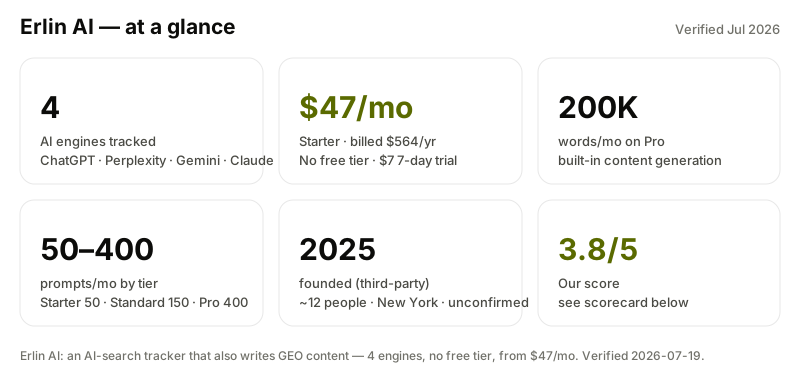
Here's an honest caveat you should read before anything else: Erlin's own site publishes no company information — no founding year, no HQ, no team size, no funding. Third-party sources (Tracxn and deal aggregators) claim Erlin was founded in 2025, is based in New York, was started by Sid Tiwatnee, runs a team of roughly 12, and does about $487K in ARR. I could not confirm any of that on erlin.ai, so treat every one of those numbers as third-party and unconfirmed, not vendor-stated. That opacity matters when you're weighing a tool you'll pipe your brand data into.
What Erlin AI does — the full feature set
Visibility, sentiment, and Share of Voice tracking
The core loop is prompt-based. You add the questions your buyers ask, Erlin runs them across its engines, and reports how often you're named, how you're described (sentiment), and your Share of Voice versus rivals over time. Prompt allowances are the unit you buy — 50/mo on Starter, 150/mo on Standard, 400/mo on Pro.
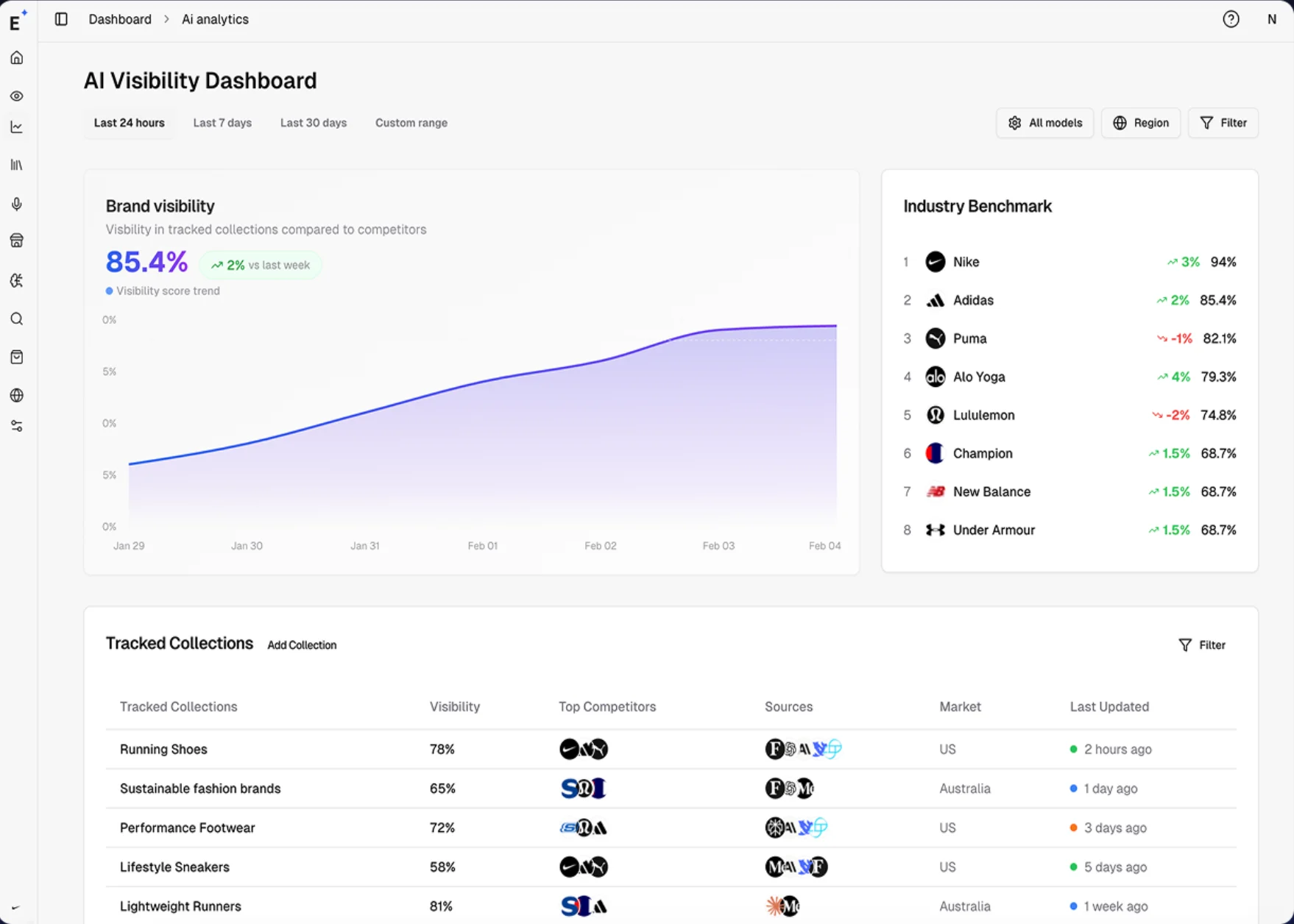
Erlin's AI Visibility Dashboard — your score against an industry benchmark, with region-level tracking across collections.
Prompt- and keyword-level visibility, unified with GA and GSC
Erlin's pitch here is a single view: prompt- and keyword-level AI visibility sitting alongside your Google Analytics and Google Search Console data. Tying AI mentions to real traffic and search performance in one screen is a sensible design — it's the "are we visible and is it driving anything" question most teams actually want answered.
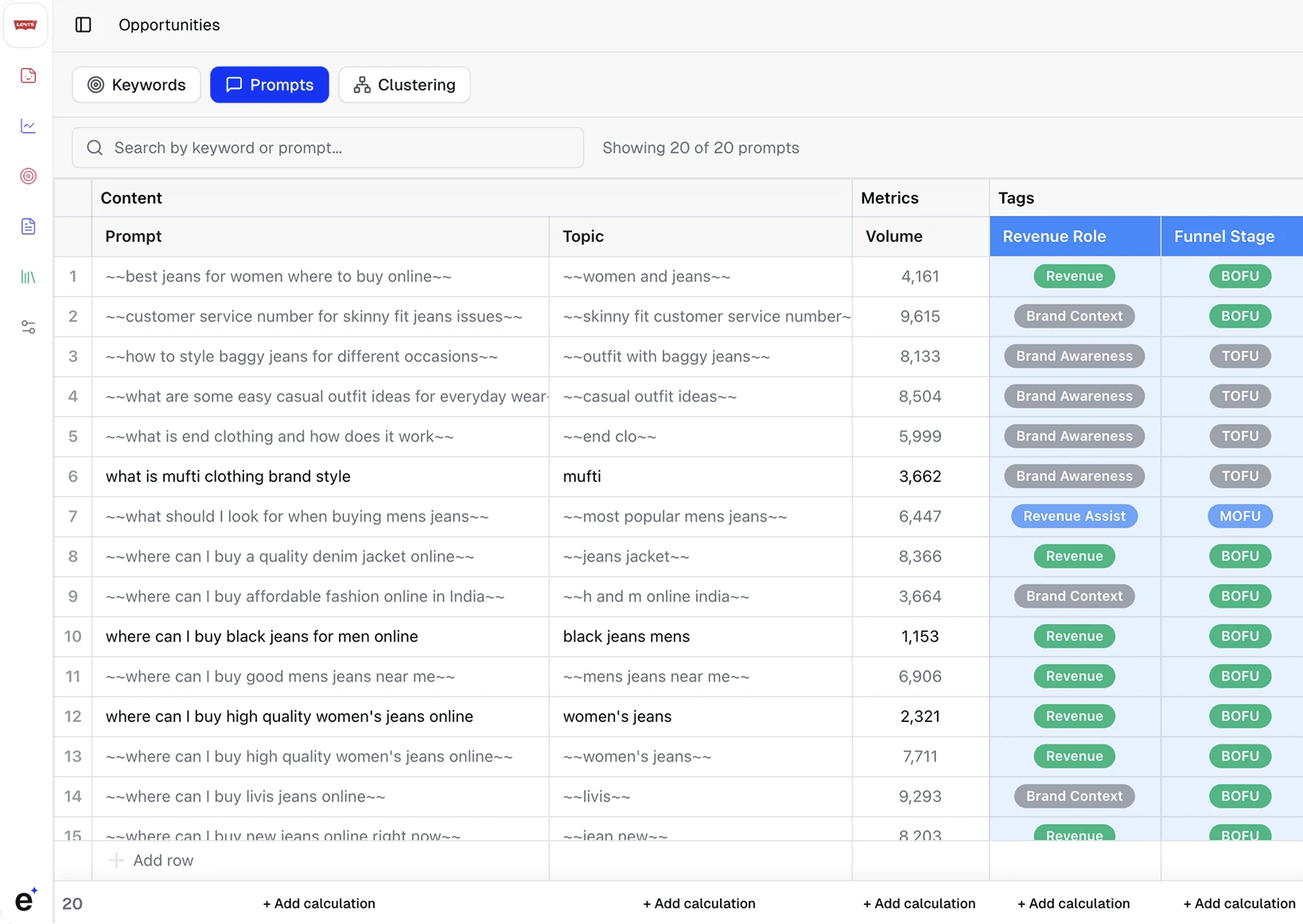
Erlin's Opportunities view — prompts scored by volume and tagged by funnel stage and revenue role, so you prioritize what drives pipeline.
Competitor leaderboard and per-platform breakdown
Define a competitor set and Erlin shows who the assistants default to recommending, broken down per platform, and tracks competitor presence inside each answer. This is where a tool like this earns its keep for positioning — you can see which rival owns the AI airtime you want, per engine, then go close that gap.
Citation tracking — with Reddit and YouTube called out
Erlin surfaces the sources the answers pull from, and explicitly names Reddit and YouTube among them. That's the practical heart of AEO: the models assemble answers from third-party pages far more than from your own site, so knowing which sources they trust tells you where to go earn a mention. Naming the platforms plainly is a clear, useful touch.
Built-in content generation — the standout
This is Erlin's biggest genuine edge. It drafts optimized articles at volume — 50,000 words/mo on Standard (roughly 30 articles) up to 200,000 words/mo on Pro (roughly 120). Around that sits an automated workflow: research to content briefs to draft generation, with task management to keep the pipeline moving. FixAEO now combines measurement with AI Marketer and Agents for research, briefs, and first drafts, but it does not offer Erlin's published bulk word allowance. If high-volume article production is the main job, Erlin retains the clearer specialization.
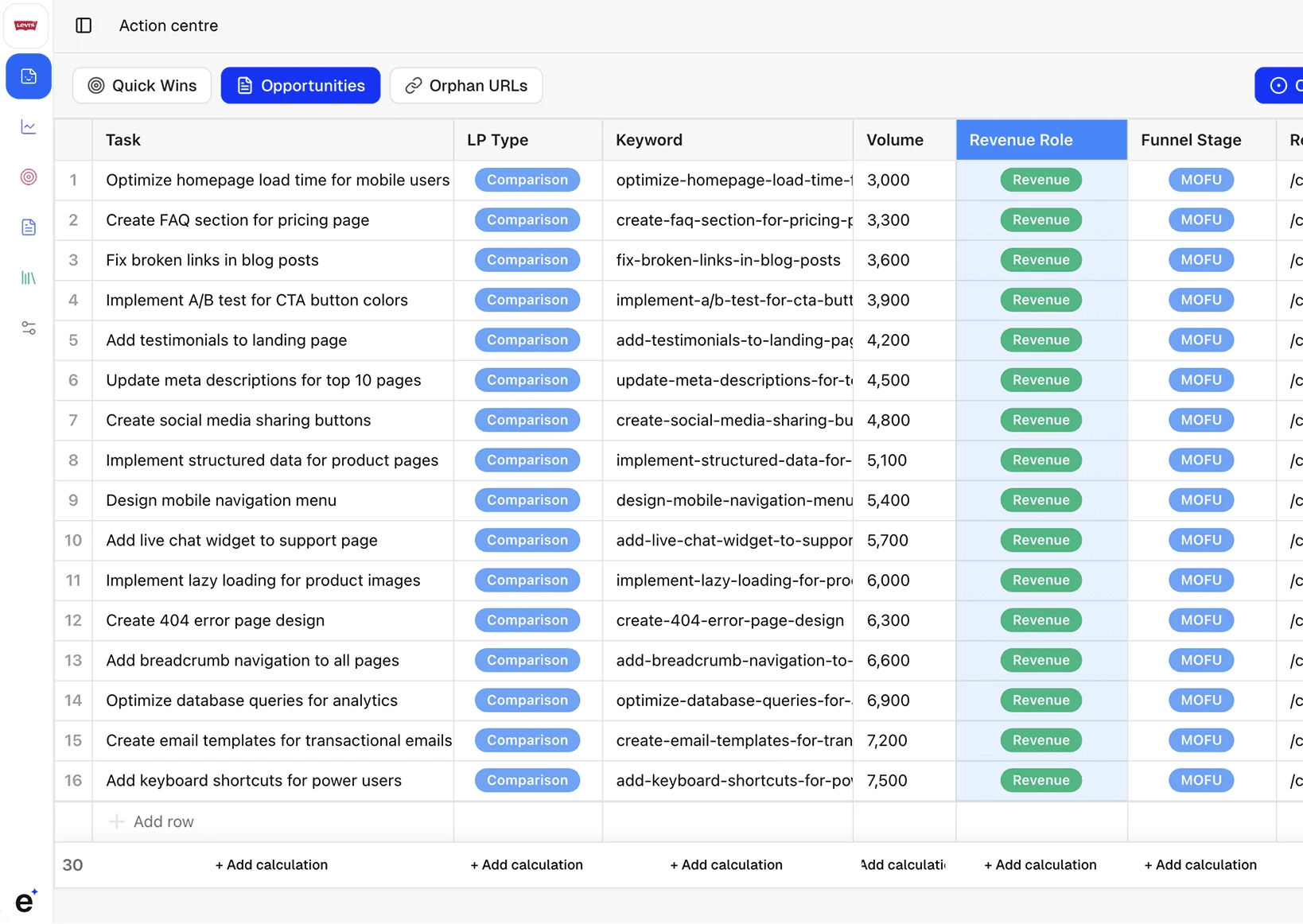
Erlin's Action Centre — it turns the gaps into prioritized, trackable tasks, and can draft the content to close them.
Reporting, integrations, and API
Erlin lists Slack integration for daily/weekly visibility reports, weekly reporting on every tier, and API access from Starter up — which is unusually early; a lot of rivals gate API to their top tier. Team seats are generous too: 10 on Starter, up to 50 on Pro.
"Done For You" managed service
Separately from the SaaS tiers, Erlin offers a managed GEO service starting from $997/mo — Erlin runs the visibility-plus-content program for you. It's an agency-style engagement, not a self-serve plan. FixAEO has no equivalent; we're self-serve only.
One honest gap: for all the breadth, Erlin's tracked-engine list is short (four named engines) and its company footprint is unverifiable. Breadth of features isn't the same as breadth of coverage, and this is a case where the two diverge.
How Erlin AI collects its data
Erlin doesn't publish its exact capture method in fine detail, and the category splits on this: some tools read model APIs, others capture what a logged-in user actually sees in the product UI. Those can differ — an API response isn't always identical to the answer a real person gets in ChatGPT or Perplexity. Erlin's public pages describe what it tracks (visibility, sentiment, Share of Voice, citations including Reddit and YouTube) and how often it reports (weekly reporting, Slack digests), but not the underlying method. If that distinction matters for your category, put it to Erlin directly before you buy — I won't assert a method I couldn't confirm.
What's clearly stated: prompt runs are metered monthly (50 to 400 depending on tier), competitor presence is tracked per answer and per platform, and results are unified with GA and GSC in one view.
Setting up Erlin AI: what using it actually looks like
Erlin's homepage funnels you into a "Start Visibility Assessment" / "Get started" flow, which requires signup. Based on the feature set, the setup shape looks like this:
- Create your workspace with your brand and domain (1 workspace on Starter, up to 5 on Pro).
- Connect GA and GSC so AI visibility sits next to real traffic and search data.
- Add your prompts and keywords — the buyer questions you want to track (50/mo on Starter).
- Add competitors to benchmark against, per platform.
- Review citations — see which sources (including Reddit and YouTube) feed the answers.
- Generate content — turn gaps into briefs and drafts inside the same tool, then manage the tasks to publish.
The friction is at the front door, not the flow: there's no free tier, so even a quick look costs the $7 seven-day trial. And with the company details absent from the site, you're signing up on less public information than you'd get from most funded competitors.
Which AI engines Erlin AI tracks
Here's where the nuance lives, so read carefully. Erlin's own site names four engines: ChatGPT, Perplexity, Gemini, and Claude ("500+ brands across ChatGPT, Perplexity, Gemini and Claude"). The pricing page does not spell out which of those each self-serve tier gets — only the Enterprise tier explicitly says "All LLMs + Custom LLM / RAG." So the assumption that all four are on every paid plan is inferred, not stated.
| Tier | Engines |
|---|---|
| Starter / Standard / Pro | ChatGPT, Perplexity, Gemini, Claude (4 core — per-tier allocation not stated on the pricing page) |
| Enterprise | "All LLMs + Custom LLM / RAG" (the only tier that explicitly promises every engine) |
Two things to internalize. First, Google AI Overviews appears only in Erlin's blog/knowledge-hub content, never in the platform or pricing feature lists — so I can't confirm it's an actively tracked engine, and I won't claim it is. Second, I found no Copilot, no Grok, no DeepSeek, and no Google AI Mode anywhere on the vendor site. That's a materially narrower list than several rivals.
To Erlin's credit, Claude is one of its four core engines with no per-tier engine cap shown below Enterprise — so a $47/mo Starter plan appears to include Claude. That's a real point in Erlin's favor: FixAEO gates Claude (along with Grok and DeepSeek) to Enterprise, so our $29 and $79 plans don't track it. The flip side: FixAEO's paid plans do cover Copilot, Google AI Overviews, and Google AI Mode — three surfaces Erlin doesn't list at all. It's a genuine trade, not a clean win either way.
Erlin AI pricing
Pricing is public but rewards a close read. Straight from the source (verified on erlin.ai/pricing, 2026-07-19; USD):
| Plan | Price | Workspaces | Prompts/mo | Team | Content/mo | Notable |
|---|---|---|---|---|---|---|
| Trial | $7 for 7 days | — | — | — | — | paid trial on all paid plans; not free |
| Starter | $47/mo (billed $564/yr) | 1 | 50 | 10 | yes | API access, weekly reporting, email support |
| Standard | $197/mo (billed $2,364/yr) | 3 | 150 | 10 | 50,000 words (~30 articles) | email + chat support |
| Pro | $347/mo (billed $4,764/yr) | 5 | 400 | 50 | 200,000 words (~120 articles) | Slack support |
| Enterprise | Custom | unlimited | custom | custom | — | All LLMs + Custom LLM / RAG |
| Done For You | from $997/mo | — | — | — | — | managed/agency GEO service |
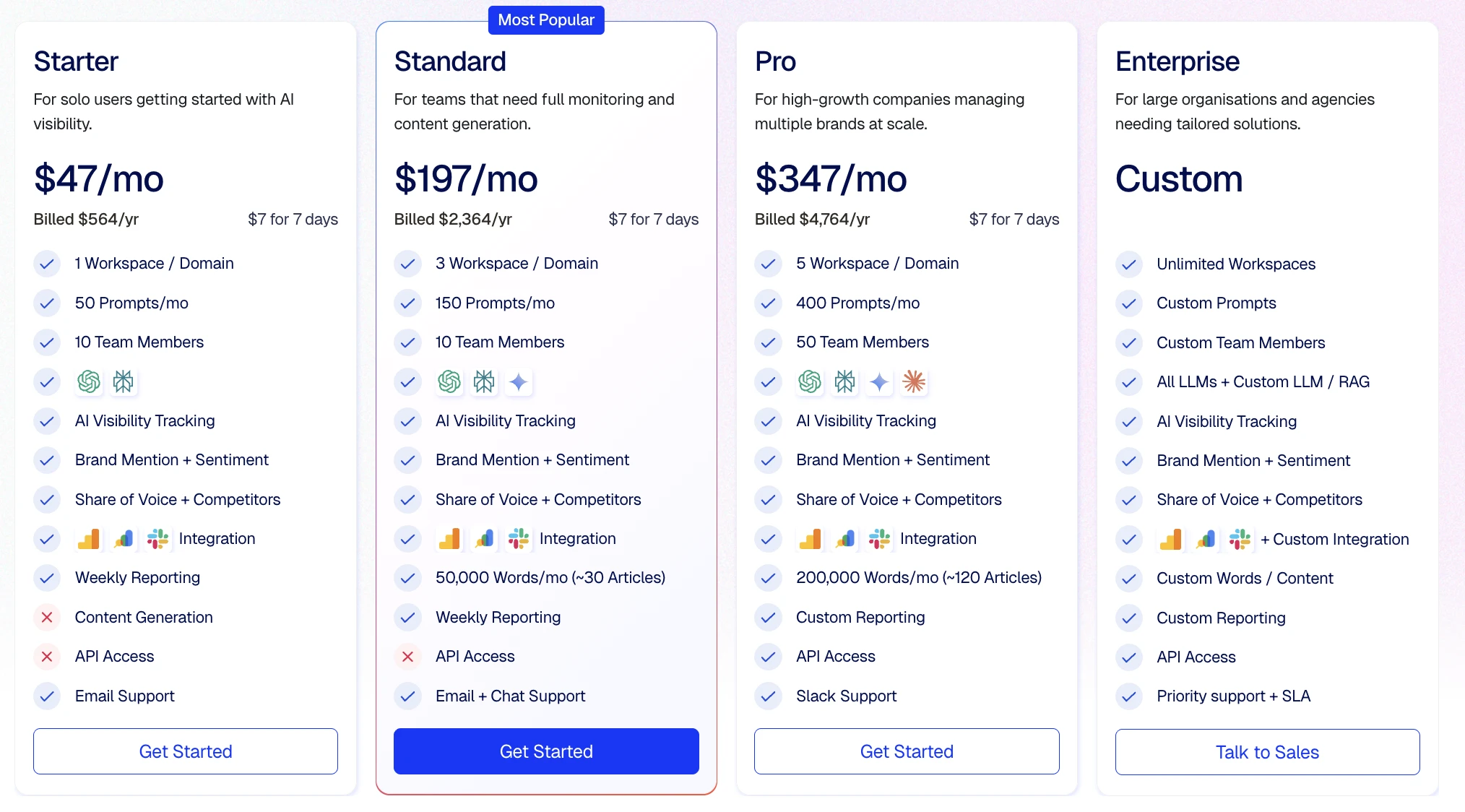
Erlin's pricing, July 2026 — from $47/mo (annual), no free tier; content generation and more engines unlock on higher tiers.
A few honest notes:
- There is no free tier. The only entry point is the $7, 7-day paid trial — cheap, but not free, and there's no free-forever plan anywhere on the site. That's the biggest difference between Erlin and the free-first tools in this category.
- Annual billing carries no discount. Starter's $564/yr is exactly 12 × $47; Standard's $2,364/yr is 12 × $197. You pay the same annually as monthly — unusual, since most rivals discount annual.
- The Pro annual figure doesn't reconcile. The page shows "$347/mo" but "billed $4,764/yr" — and $4,764 ÷ 12 = $397/mo, not $347. The vendor's own numbers disagree; I've quoted both verbatim and I don't know which is right. Confirm with Erlin before committing to Pro.
- API from Starter and 10 seats on the entry plan are genuinely generous — many rivals gate both.
- Enterprise is the only tier that promises every engine ("All LLMs + Custom LLM / RAG"), which implies the cheaper tiers may not get the full list.
Erlin AI capabilities, scored
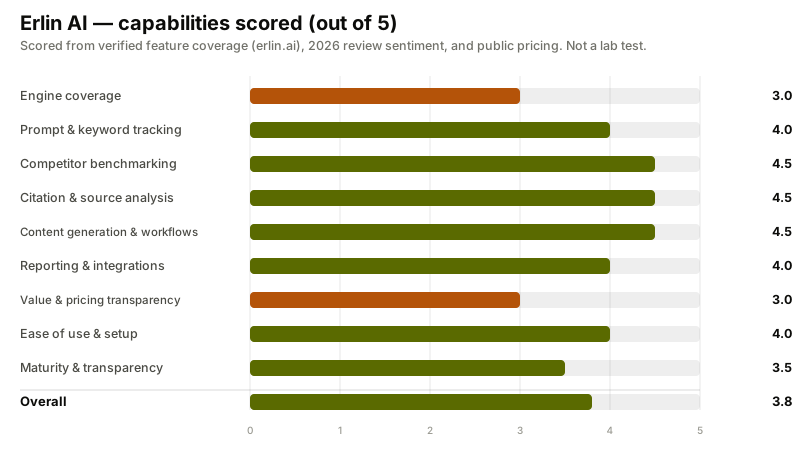
The scores above come from verified feature coverage on erlin.ai, its public pricing, and the (limited) third-party record — not a lab benchmark, and I've shown the rubric so you can argue with it. The shape is clear: Erlin is strong on content, citations, and competitor work, and weakest on engine coverage and pricing transparency.
Two scores deserve a word. Content generation and workflows (4.5) is Erlin's signature — few trackers write for you at all, let alone at 200k words/mo. Engine coverage (3.0, weak) is the drag: four named engines, no Copilot/Grok/DeepSeek/AI Mode, and AI Overviews unconfirmed as a tracked surface. Value and pricing transparency (3.0, weak) reflects the no-free-tier entry, the no-discount annual, and a Pro price the page itself can't reconcile. Maturity and transparency (3.5) is dragged by the thin company info on the vendor site.
Erlin AI pros
- Built-in content generation at volume — 50k words/mo on Standard, 200k/mo on Pro. Genuinely rare in a visibility tracker, and Erlin's biggest edge.
- Automated content workflows — research to brief to draft, with task management. Most trackers have nothing like it.
- Claude on the entry tier — one of four core engines, apparently included from $47/mo (FixAEO and Peec gate Claude to their top tiers).
- Citation sources named by platform — Reddit and YouTube called out explicitly, a clear way to see where answers pull from.
- GA + GSC unified with AI visibility — measurement and real traffic in one view.
- Generous seats and early API — 10 team members on Starter (up to 50 on Pro), API access from Starter.
- A managed "Done For You" GEO service ($997/mo) for teams that want it run for them.
- Competitor leaderboard with per-platform breakdown — legible positioning data.
Erlin AI cons
- No free tier — entry is a $7, 7-day paid trial, and there's no free-forever plan to run occasional audits.
- Only four named engines — ChatGPT, Perplexity, Gemini, Claude. No Copilot, Grok, DeepSeek, or Google AI Mode found on the site, and Google AI Overviews appears only in blog content, not as a listed tracked engine.
- Per-tier engine allocation isn't stated — only Enterprise explicitly promises "All LLMs"; whether Starter/Standard/Pro all include every core engine is unclear.
- The company is opaque — no founding year, HQ, team, or funding on the vendor site; third-party sources are unverified.
- Pricing that doesn't reconcile — Pro's $347/mo vs $4,764/yr (which divides to $397) is a straight contradiction on the page.
- No annual discount — you pay 12× the monthly rate to commit for a year.
- Content quality is unproven — the drafts may be great or generic; I can't verify output quality from the outside.
- Unattributed outcome claims — figures like "3x conversion," "18% visibility lift," "10x ROI," and "$200k saved" appear as marketing numbers with no independent backing.
Who Erlin AI is for — and who should skip it
Solo founders and indie marketers get a mixed deal. Erlin's $47/mo Starter with content generation and Claude included is appealing if you want to write and track in one place — but there's no free tier to test the waters, and the opaque company is a bigger risk when you're spending your own money. If a free start is what you need, a free-first tool fits better (disclosure: FixAEO is ours, and free to start).
Startups and small teams are arguably the sweet spot. If you're generating content anyway, folding drafting, tracking, GA/GSC, and competitor data into one $47–$197/mo tool is a real consolidation play — fewer subscriptions, one workflow. Just price the prompt caps (50–150/mo) against how many questions you actually need to watch.
Agencies get the most from the "Done For You" service ($997/mo) and the generous seat counts (up to 50 on Pro), plus content generation at 200k words/mo to service multiple clients. The workspace caps (5 on Pro) are the constraint — a large client roster will push you to Enterprise or the managed service.
Enterprises have a clear path via the Enterprise tier — it's the only one that promises "All LLMs + Custom LLM / RAG," plus unlimited workspaces and custom seats. The honest caveat: with no public company footprint, security-conscious procurement will need to do more diligence on Erlin than on a funded, audited competitor.
Skip it (for now) if you want a permanent free tier (Erlin has none — even the trial costs $7); you need broad engine coverage like Copilot, Google AI Overviews, Google AI Mode, Grok, or DeepSeek (Erlin lists four engines, none of those five confirmed); or an unverifiable vendor is a dealbreaker for you.
Erlin AI vs the alternatives
Erlin sits in an unusual lane — a visibility tracker that also generates content — so it competes both with pure trackers and with content tools. Rough entry pricing, mid-2026 (verify each on the vendor's page; see best AEO tools for the full field):
| Tool | Entry price | Free option | Engines (entry tier) | Best for |
|---|---|---|---|---|
| Erlin AI | $47/mo ($7 trial) | none (paid trial) | 4 (ChatGPT, Perplexity, Gemini, Claude) | tracking plus built-in content generation |
| FixAEO (us) | Free + from $29/mo | permanent free scan | 6 on Lite (9 on Enterprise) | self-serve founders & SMBs |
| Peec AI | $95/mo | none | 3 of 6 (11 at Enterprise) | funded marketing teams, BI reporting |
| Profound | from $99/mo | none | varies (10 at Enterprise) | enterprise, demand data |
| Otterly | from $29/mo | trial only | 4 core | content teams |
A quick lane-by-lane read:
- vs FixAEO (us): we're free to start, $29/mo paid, and our Lite plan includes 6 mainstream engines — ChatGPT, Gemini, Perplexity, Copilot, Google AI Overviews, and Google AI Mode — versus Erlin's four. We also add AI-crawler tracking, GA4 revenue attribution, GSC integration, and an MCP server on the $29 plan. Where Erlin genuinely beats us: it generates content (we do none), it includes Claude on its entry tier (we gate Claude, Grok, and DeepSeek to Enterprise), and it offers a managed "Done For You" service (we're self-serve only). It's a real trade. Disclosure applies — I build FixAEO.
- vs Peec AI: Peec is more polished and funded, with a cleaner BI/Looker reporting story, but it's paid-only from $95/mo, caps you at three of six engines below Enterprise, and does no content generation. See our Peec AI review.
- vs Profound: Profound leans upmarket with deeper demand data (Prompt Volume) and a mature enterprise footprint, at a higher floor and no content engine. See our Profound review.
- vs Otterly: Otterly undercuts on price and adds a pre-publish citation predictor, but it's a tracker, not a content generator. If content generation is your reason for looking at Erlin, Otterly won't replace it.
The honest read: if you specifically want tracking and content generation in one tool, Erlin is one of the few that offers both, and $47/mo is a reasonable floor for that combination. If you want to start free, need broad engine coverage, or want a vendor with a public track record, other tools fit better. See our full best AEO tools roundup for the wider field.
Erlin AI vs FixAEO — the honest head-to-head
Since I build FixAEO, here's the straight comparison (disclosure applies):
| Erlin AI | FixAEO (us) | |
|---|---|---|
| Entry price | $47/mo (billed annually), no free tier | Free, then $29/mo |
| Free tier | None ($7 7-day trial) | Yes — 1 Gemini scan/day + 22 free tools |
| Engines (entry paid) | 4 (incl. Claude) | 6 on Lite (Claude is Enterprise-only for us) |
| Best for | tracking + content generation in one, Claude on entry | self-serve SMBs & founders |
| Standout | built-in content generation + managed GEO | free start, real-browser + geo-aware capture, MCP server |
Erlin wins on built-in content generation and offering Claude on an entry plan (we gate Claude to Enterprise). FixAEO wins on a genuine free start, a public track record, transparent pricing, and broader mainstream-engine coverage. See our best AEO tools guide for the wider field.
If you'd rather start free (disclosure: that's us)
I'll be straight, since I flagged it up top: FixAEO is our tool, so weigh this accordingly. But if the thing keeping you off Erlin is the no-free-tier entry, that gap is exactly what we built for. FixAEO runs a free scan — no signup, about 60 seconds — so you can find out whether AI search even moves the needle for your brand before you pay anyone. Paid Lite is $29/mo ($25 annual) and includes 6 mainstream engines — ChatGPT, Gemini, Perplexity, Copilot, Google AI Overviews, and Google AI Mode — versus Erlin's four. Need more room? Growth is $79/mo ($68 annual) with the same six engines, daily rescans, 5 brands, and 50 tracked prompts.
A few things we do that Erlin doesn't lean on: we track which AI crawlers actually hit your site (GPTBot, ClaudeBot, PerplexityBot and the rest), so you can see whether the models are even reading your pages; we tie GA4 attribution to AI referral traffic so you can show revenue, not just visibility; we integrate Google Search Console; and our MCP server lets you query your AI-visibility data straight from Claude, Cursor, or ChatGPT — on the $29 plan (MCP isn't unique to us, though; Peec, Profound, and Otterly have one too). We also read what a logged-in user actually sees through real browser sessions on residential IPs, with location-aware tracking by region. And there's a Chrome extension plus 22 free standalone tools (schema, llms.txt, robots.txt generators, audits, validators).
Where Erlin is genuinely stronger, in fairness: it generates content (we do none — this is its real edge), it includes Claude on entry (we gate it to Enterprise), and it offers a managed service. We beat it on a free tier, engine breadth (6 vs 4, including Copilot, AI Overviews, and AI Mode), crawler tracking, and GA4/GSC attribution. If content generation in one tool is the priority, buy Erlin. If a free start and broader engine coverage matter more, run a free scan and judge for yourself.
Do you need Erlin's content engine, or just the tracking?
Fair question before you commit. Erlin's whole differentiator is that it writes — briefs and drafts at volume, in the same tool that measures your visibility. If your team is producing GEO content anyway, bundling the drafting saves a subscription and a context switch, and that's worth real money. But if you already have writers, or you only want to see where you stand and act on it yourself, you're paying for a content factory you won't use — and a pure tracker (often free-first, and with broader engine coverage) does the measurement job for less. The honest distinction isn't quality — Erlin's combined pitch is legitimate — it's fit: pay for the content engine if you'll run it; don't if you won't.
Is Erlin AI worth it? The verdict
Buy it if you want AI-visibility tracking and AI content generation in one tool, you value Claude on an entry plan, and a managed GEO service appeals — that combination is genuinely rare, and my score reflects the strength (3.8/5).
Skip it if you want a permanent free tier, you need broad engine coverage (Copilot, Google AI Overviews, Google AI Mode, Grok, DeepSeek), or an opaque vendor with no public track record and a pricing page that contradicts itself gives you pause. Those are real gaps, not nitpicks.
Erlin is an ambitious product with a legitimate differentiator — few trackers write for you, and it does. Its catches are coverage, transparency, and price structure: four engines, zero company detail on its own site, no free tier, no annual discount, and a Pro price the page can't reconcile. For teams that specifically want tracking-plus-content in one seat, it's worth a trial. For everyone else, start with a free-first tracker and move up to Erlin if and when the built-in content engine becomes the thing you're missing.
How I researched this
No sponsorship, no affiliate link. I verified Erlin's features, engine list, and pricing against its own pages — erlin.ai, erlin.ai/pricing (re-fetched to confirm the exact dollar figures verbatim), and erlin.ai/platform/insights — on 2026-07-19. Pricing and engine counts are quoted verbatim; nothing was computed or inferred except where I flag the arithmetic (the Pro annual figure). Company and founding details came only from a web search (Tracxn and review aggregators), not the vendor site, and are flagged unverified throughout. Where I couldn't confirm something — the data-capture method, per-tier engine allocation, whether AI Overviews is actually tracked, the reconciling Pro price — I said so rather than assert it. And I build a competing tool, which is disclosed above.
FAQ
What is Erlin AI?
Erlin AI is an AI-search visibility (AEO/GEO) platform that tracks how ChatGPT, Perplexity, Gemini, and Claude mention and cite your brand, benchmarks you against competitors, surfaces the sources answers pull from (including Reddit and YouTube), and — unusually — generates SEO/GEO content in the same tool.
How much does Erlin AI cost?
Verified on erlin.ai/pricing on 2026-07-19 (USD): a $7, 7-day paid trial; Starter $47/mo (billed $564/yr); Standard $197/mo ($2,364/yr); Pro $347/mo (billed $4,764/yr — which divides to $397, a discrepancy on the page); Enterprise custom; and a "Done For You" managed service from $997/mo. Annual billing carries no discount.
Does Erlin AI have a free plan?
No. There's no free-forever tier. The only entry point is a paid trial priced $7 for 7 days, shown on Starter, Standard, and Pro. Even the trial costs money. If a free start is what you need, free-first tools like FixAEO (our tool — one free scan, no signup) fill that gap.
How many AI engines does Erlin AI track?
Erlin's site names four: ChatGPT, Perplexity, Gemini, and Claude. Only the Enterprise tier explicitly promises "All LLMs + Custom LLM / RAG," so per-tier allocation on Starter/Standard/Pro isn't spelled out. No Copilot, Grok, DeepSeek, or Google AI Mode appears on the site, and Google AI Overviews shows up only in blog content, not as a listed tracked engine.
Does Erlin AI generate content?
Yes — this is its standout feature. Erlin drafts optimized articles at volume (50,000 words/mo on Standard, ~30 articles; 200,000 words/mo on Pro, ~120), with an automated research-to-brief-to-draft workflow and task management. FixAEO also creates briefs and first drafts through AI Marketer and Agents, but does not publish Erlin-style bulk word quotas. Output quality is not something I could verify from the outside.
Does Erlin AI track Claude?
Yes. Claude is one of Erlin's four core engines, and there's no per-tier engine cap shown below Enterprise, so the $47/mo Starter plan appears to include it. That's a point in Erlin's favor over tools like FixAEO and Peec, which gate Claude to their top tiers.
Does Erlin AI track Copilot, Grok, DeepSeek, or Google AI Mode?
Not that I could find. None of those four appear anywhere on the vendor site. Google AI Overviews is mentioned only in Erlin's blog/knowledge-hub content, not in the platform or pricing feature lists, so I can't confirm it's an actively tracked engine. If broad engine coverage matters, this is Erlin's weakest area.
Who is behind Erlin AI?
Erlin's own site publishes no founding year, HQ, team size, or funding. Third-party sources (Tracxn and deal aggregators) claim it was founded in 2025 in New York by Sid Tiwatnee, with a team of roughly 12 and about $487K ARR — but none of that is stated by Erlin, so treat it all as unconfirmed.
Is Erlin AI worth it?
For teams that want AI-visibility tracking and AI content generation in one tool — and value Claude on an entry plan — yes, it's a rare combination and we scored it 3.8/5. For anyone who wants a free tier, broad engine coverage, or a vendor with a public track record, the gaps (four engines, no company info, a self-contradicting Pro price) make it harder to recommend over the alternatives.
What are the best Erlin AI alternatives?
Depends on the lane: FixAEO (free to start, 6 engines on Lite at $29/mo, plus AI Marketer, 17 Agents, GA4/GSC context, and crawler tracking), Peec AI (polished, funded, from $95/mo), Profound (enterprise demand data), and Otterly (cheaper tracker with a citation predictor). See our best AEO tools roundup for the full field.
Erlin AI vs FixAEO — which should I pick?
Different buyers. Erlin bundles tracking with high-volume content generation, includes Claude on its $47/mo entry plan, and offers a managed service — but tracks four engines, has no free tier, and publishes no company details. FixAEO (ours) is free to start, $29/mo paid, tracks 6 mainstream engines on Lite, and adds AI Marketer, 17 Agent templates, crawler tracking, GA4 attribution, GSC integration, and an MCP server. Pick Erlin for its published bulk-content allowance; pick FixAEO for a free start, broader engine coverage, and reviewable AEO workflows.
Is Erlin AI legit and safe to use?
It's a real, working product with public pricing and a live platform, and there's a third-party record (Tracxn) of the company. The honest caveats are transparency and maturity, not an obvious scam: the vendor site publishes no company information, the annual pricing carries no discount, and the Pro tier's monthly and annual figures don't reconcile. Do a little extra diligence — especially if procurement or security review is involved — before committing budget.
Related reading
12 Best Answer Engine Optimization Tools (2026)
12 answer engine optimization tools compared — engines covered, entry price, free tier — with honest takes on which to pick by stage and budget.
19 min readPeec AI Review: Pricing, Limits & Who It Fits (2026)
An independent Peec AI review covering pricing, its 3-model self-serve limit, 13-model Enterprise coverage, new reporting tools, pros, cons, and best-fit teams.
25 min readProfound Review (2026): Features, Pricing, Pros & Cons
An honest Profound review — what it does, real 2026 USD pricing, the engines it tracks by tier, Prompt Volume and Agents, pros, cons, and who should skip it. Verified July 2026.
27 min readAnswer Engine Optimization Services: A Buyer's Guide
What answer engine optimization services actually do, what the work involves, and how to choose between DIY, an agency, or a self-serve tool without overpaying.
17 min readWhat is AEO? Answer Engine Optimization explained
Answer Engine Optimization (AEO) means getting AI assistants to recommend your brand. Learn what AEO is, why it matters more than SEO, and how to start.
18 min read
Free AEO tools
Put this into practice with free FixAEO tools — no signup required.
AI Visibility Checker
Score your brand across 9 AI engines
AEO Audit Tool
Answer-engine readiness scan
Schema Generator
Build valid JSON-LD structured data
llms.txt Generator
Create a spec-compliant llms.txt
Sitemap Validator
Check your XML sitemap for errors
AI Content Grader
Grade content for AI citation readiness